
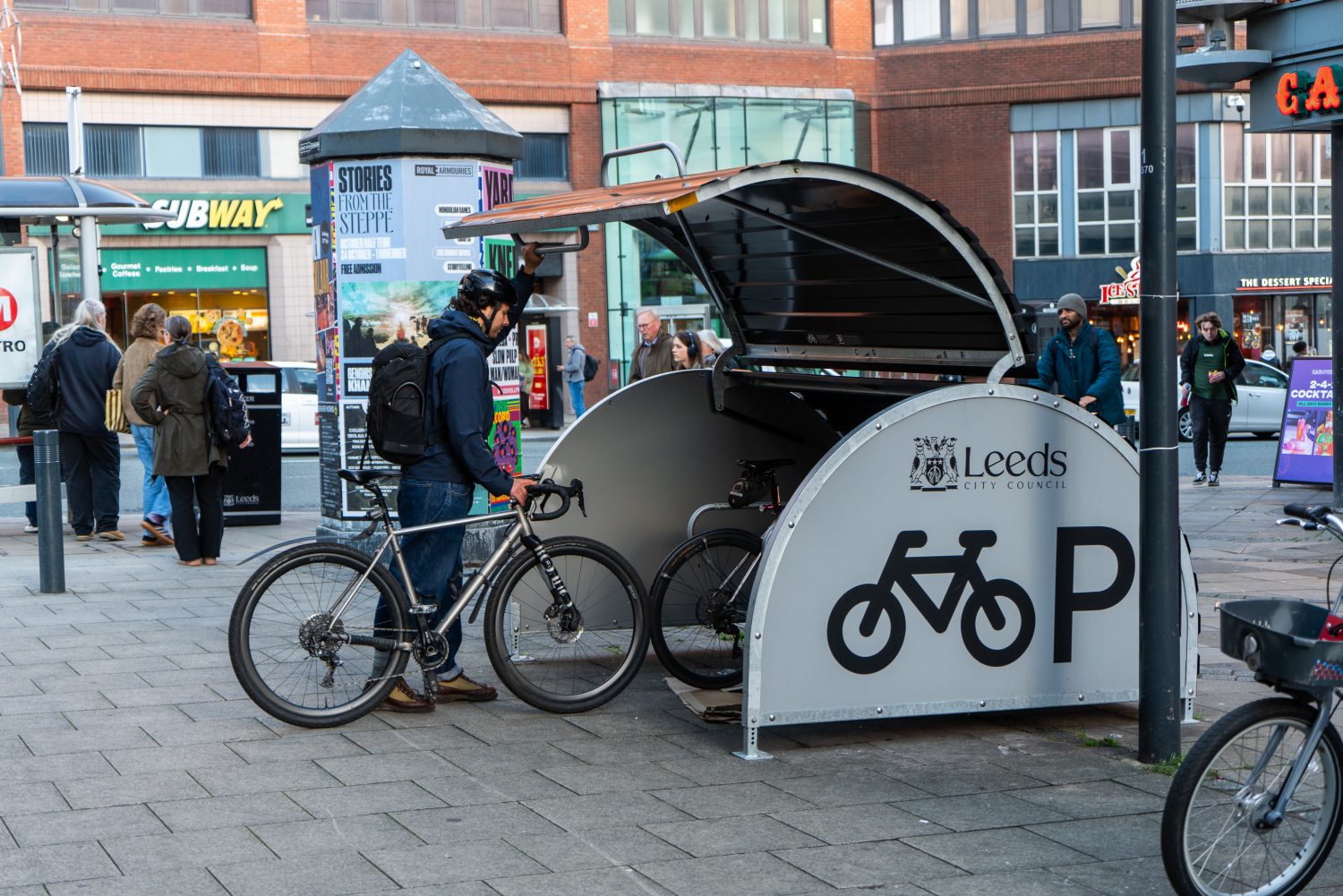
Turn car parking bays into bike bays: new report sets out how to bring Britain’s high streets back to life
Turning a single car parking bay over to shared bikes and e-scooters could bring around £146,600 a year of spending to a market-town high street – double the £73,200 generated by the same bay used for car parking
Reviving a high street costs far less than councils assume, according to our new report in partnership with design practice Create Streets. How to Bring the High Street Back to Life sets out what the best-performing town centres have in common and the national rule changes that would let every council follow them.
How to Bring the High Street Back to Life follows the Government’s £210 million high streets package, announced in September, which pledges £125 million for derelict buildings, £65 million to help communities rescue local businesses at risk of closure, and £20 million split between High Street Rental Auctions for properties empty for 12 months or more and a new Co-operative Development Programme. However, the report argues that while the money goes into buildings, the streets outside them are neglected.
The high street has been emptying for years. Councils spent over £770 million buying shopping centres between 2016 and 2019. Shropshire Council paid £51 million for Shrewsbury’s three centres in 2018, and by 2021 its own accounts valued them at £12.35 million. As units emptied and rents fell, organised crime crept in. The National Crime Agency estimated that around £1 billion of criminal cash is laundered each year through cash-heavy high-street businesses such as vape shops, barbershops and nail bars.
The report’s answer rests on three principles: quality, simplicity and permanence, favouring retrofitting existing streets over building from scratch.
Case studies show that streets designed for people to linger, rather than for traffic to pass through, see higher footfall, longer dwell times and lower vacancy:
- Altrincham cut retail vacancy from nearly one in three units in 2010, the highest in the UK, to 7.3% by 2018 after creating a walkable, car-free core. Annual footfall rose by over a million visitors.
- Stockport pedestrianised its Market Place and diverted a bus route through the historic Underbanks. The £7 million scheme doubled footfall over five years.
- Residents and teenagers redesigned Grimsby’s Church Corner, a derelict patch of church car park, and built it for £19,350.
- Lambeth found 94% of its kerbside given over to parking, although around 60% of households do not own a car. It has since raised the share in sustainable use from 6% to 10.2% in two years.
The report puts a value on what the kerbside in towns and cities. Analysis shows that a car parking bay on a market-town high street is used by around 3.5 vehicles a day, bringing an estimated £73,200 a year of spending into local shops. The same 12 square metres holds around nine shared bikes or e-scooters. At the UK average of 1.45 trips per shared vehicle per day, that bay generates around 13 trips a day and an estimated £146,600 a year of spending, even considering people arriving by bike spend less per visit than drivers. In a major city, where shared bikes are used more intensively, the figure rises to £303,300.
The report tackles the most common complaint councils raise about shared bikes: that there are too many of them on the high street. Bikes left on the pavement are a real obstruction, particularly for disabled people, but the report finds this is largely a symptom of having nowhere marked to park. Clearly marked bays in the carriageway, grouped in continuous rows rather than squeezed into leftover gaps, keep the footway clear.
Charmian Beedie, Head of Marketing and Commercial, Cyclehoop, said: “Too often, a full cycle bay is treated as a problem and a full car bay as a success. They are the same signal, but the cycle bay delivers more people to the high street. If we want busier town centres, the kerbside is the most valuable asset that councils own, and currently most of it is used to store cars. Simple, permanent changes like secure cycle parking, shared mobility bays and parklets can bring more people to local shops at a fraction of the cost of a big scheme.”
David Milner, Managing Director, Create Streets, said: “Streets that are ugly are so because councils lack the desire to change them, but because the system is counting the maintenance liabilities, not the benefits. The towns that have turned things around, Altrincham, Stockport, Stockton, did it by designing streets for people to spend time in, not just drive through. What works is cheap: trees in the ground, benches people want to sit on, clutter taken away. So much of what is built now seems to be temporary, looking more like road works than public realm improvements, so we encourage the concept of permanence; more trees in the ground, not in giant plant pots, for example.”
The report also finds that it is process, not the building work, that makes small schemes expensive. Councils spend around £30,000 on each bid for competitive funding. Three years on, the three main levelling-up funds had spent little more than a tenth of the £10.5 billion promised.
Cyclehoop and Create Streets are calling on the Government to create a simpler funding route for small high-street schemes under £250,000, so that money reaches projects costing tens of thousands rather than millions.
High streets can be beautiful, and that beauty should be permanent. Too many high street improvements are made to be temporary: trees in plastic planters and changes that look like roadworks. A tree in a pot cannot put down roots. They collect litter, take up pavement space, and are often removed within a few years. A tree planted in the ground cools the street, soaks up rainwater and grows into a lasting asset. With accessible funding, every council could follow Altrincham and Stockport, and put the high street back at the centre of community life.